What a slow reply really costs your used car business

A buyer who gets no reply does not wait. He opens the next listing. The average response time to online leads was 42 hours according to the Harvard Business Review (2011), and 23 % of the audited companies never replied at all. Fifteen years on, the mechanism has not moved. What has changed is the price you paid to get that contact in the first place.
This is where the usual reasoning stops too early. We talk about delay, about the threshold, about the window to hold. We rarely talk about the accounting line. Slow response is not a service flaw, it is money spent without return, repeated every week, invisible on every dashboard because nothing measures it.
The lead you never call back is already paid for
A listing costs money. A bump to the top of the results costs money. A campaign costs money. By the time a contact lands in your leboncoin or La Centrale inbox, the invoice is behind you: paid, and meant to be recovered on the sales that traffic produces.
An untreated lead does not repay that invoice. It does not reduce it either. It leaves it whole, and shifts it onto the leads you did manage to work. Your real acquisition cost per sale is therefore not the one you think: it is the total budget divided by the contacts you actually handled. On a month with fifty leads, twelve of them unanswered, the cost per sale rises by a quarter without a single line of the P&L moving.
The buyer does nothing dramatic. He buys elsewhere. Nobody complains, nobody cancels, no ticket opens. The loss is silent by design.
Idle stock costs more than a lost lead
This is the part the classic reasoning misses. A lost lead is one margin gone. A vehicle sitting on the lot is capital frozen, every single day, until it leaves.
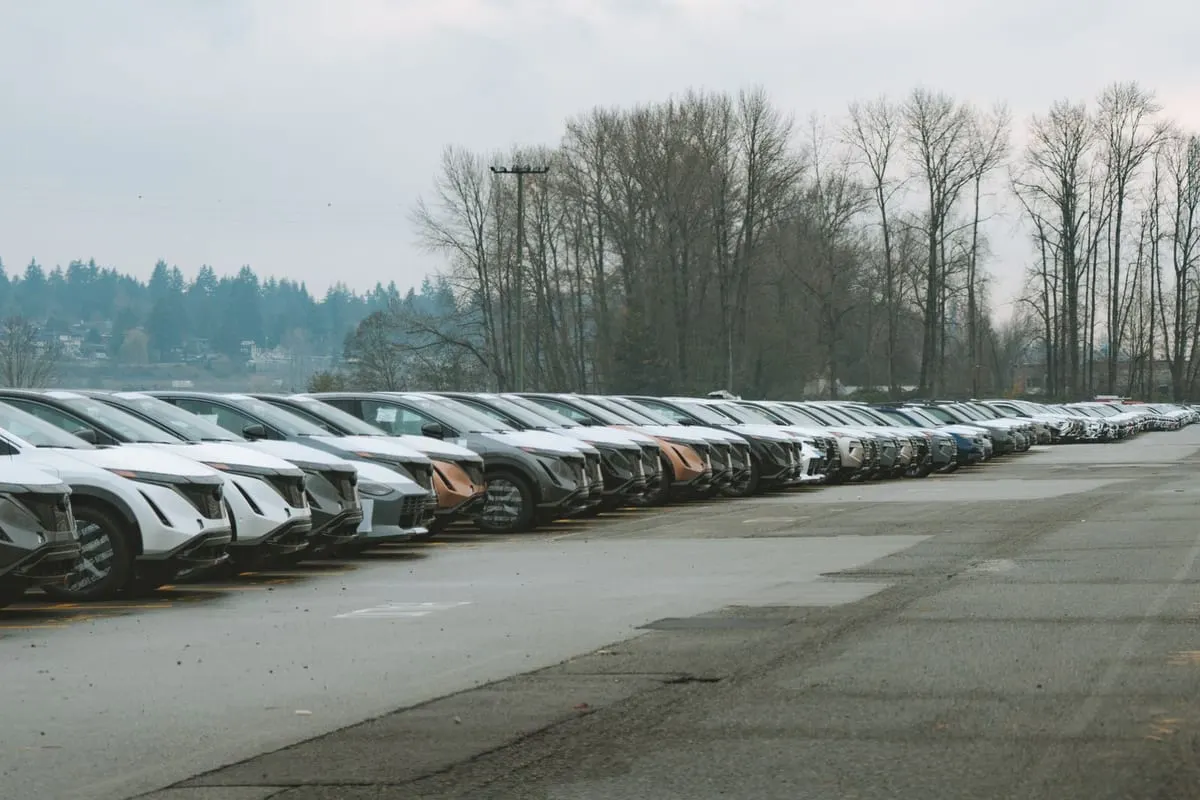
The order of magnitude is documented. According to the quarterly barometer published by Mobilians and Avere-France (Q4 2025), the average resale time for a used electric vehicle reached 161 days across all ages, on a professional stock of 61,613 units. Five months of frozen cash per vehicle. Every unanswered buyer extends that immobilisation, and the cost is not limited to the vehicle margin: it includes stock financing, depreciation, and preparation to redo.
On recent used cars the pressure is sharper still. Used vehicles under five years old fell by 7 % in 2025 according to AAA Data. The resource is scarce, expensive to source, and it attracts exactly the most mobile buyers, the ones who message four sellers in one evening. A lead on a recent used car is not worth the same as a lead on a ten year old car. Treating both with the same delay is an allocation error.
The blind spot: what your dashboard never counts
Look at your numbers. You know your sales, your average margin, perhaps your conversion rate on the leads you worked. You almost never know how many inbound contacts went unanswered beyond twenty four hours, nor the value of the stock they could have moved.
That figure exists nowhere because nothing produces it. The untreated lead is not flagged as lost. It is flagged as nothing. It stays an open conversation at the bottom of a marketplace inbox, indistinguishable from a deal in progress.
The only way to see it is to build it: inbound leads over the period, minus leads that received a first reply, multiplied by your usual conversion rate and your average margin. The result is rarely comfortable. It is also the only argument that justifies investing in response time to anyone asking you for a return.
Dormant leads still hold value
A contact left without a reply is not dead, it is cold. The distinction has consequences.
Salesforce reports in its State of Sales 2026 (a survey of 4,050 sales professionals conducted in August and September 2025) that its agents contacted 130,000 previously neglected leads and created 3,200 opportunities in four months. One caveat matters: Salesforce measures its own customers and promotes its own product. The figure shows a direction, not a market average.
The direction is clear enough. Contacts abandoned for lack of time are a reserve, and that reserve is not workable by hand for a trader running a lot on his own. Follow-ups have to leave without being thought about, on a chosen rhythm, and stop when the buyer asks them to.
The deferred cost: a reputation built without you
The ignored buyer does not simply buy elsewhere. He forms an opinion, and he keeps it.
That opinion rarely surfaces as an online review, which makes it more dangerous, not less: it acts by subtraction. No return for servicing, no trade-in three years later, no recommendation to the colleague looking for the same model. For a business living on local word of mouth and repeat custom, the cumulative loss dwarfs the margin on the original car.
Fast response, meanwhile, has become the standard. Cox Automotive, in its Car Buyer Journey Study (16th edition, published January 2026, based on 2,300 consumers surveyed in autumn 2025), finds that buyers who used artificial intelligence tools during their journey report the highest satisfaction levels, citing real-time answers and personalised recommendations. Your buyer’s benchmark is no longer the dealer down the road. It is the conversation he had with an AI the day before.
What a systematic reply changes
The shortfall described here is avoidable, on one condition: that the reply stops depending on your availability.
Osmosia connects to your marketplace inboxes and answers every new contact in under 15 minutes, 7 days a week from 7am to 11pm. Each conversation is rated by a purchase intent score, which separates the browsers from the buyers and hands you back the time you spent calling numbers that no longer answer. Follow-ups go out on the delays you set. Appointments land in your calendar.
This is not a comfort upgrade. It closes the window during which a buyer, somewhere, opens the next listing.
FAQ
What you're probably wondering
The cost has three parts: the acquisition spend already committed (listing, bump, campaign), the margin on the sale that never happened, and the holding cost of the vehicle still on the lot. To estimate it, multiply the number of leads with no first reply by your usual conversion rate and average margin, then add the matching acquisition budget.
Because they produce no signal. The buyer does not complain, cancels nothing, and buys elsewhere in silence. The conversation stays open in the marketplace inbox, indistinguishable from a live deal. According to the Harvard Business Review (2011), 23 % of the companies audited never replied to their online leads.
Yes, it hits stock and reputation. A car that does not leave freezes capital: the Mobilians and Avere-France barometer (Q4 2025) measures an average resale time of 161 days for a used electric vehicle. And the poorly handled buyer returns neither for servicing, nor for a trade-in, nor with a recommendation.
Not necessarily. Salesforce states in its State of Sales 2026 that its agents contacted 130,000 previously neglected leads and created 3,200 opportunities in four months, bearing in mind this is vendor data measured on its own customers. A structured follow-up, spaced out and stopped on request, keeps part of that reserve reachable.
Osmosia connects to marketplace inboxes and answers every new contact in under 15 minutes, 7 days a week from 7am to 11pm. Each conversation receives a purchase intent score, follow-ups run on the delays set by the seller, and qualified appointments are booked. The lead you paid for gets worked, instead of sinking to the bottom of a pile.
Read next
-
 Responsiveness
Replying to car leads on evenings and weekends, when the dealership is closed
Your prospects write evenings and weekends, when you're closed. How to cover these leads without an on-call rota: instant replies, appointments booked.
Pierre Osmont June 15, 2026 3 min -
 Responsiveness
Responsiveness in car sales: why the first 15 minutes decide the sale
A car buyer messages several sellers at once. Backed by MIT and HBR: why replying in under 15 minutes decides the sale.
Pierre Osmont May 12, 2026 7 min -
 Sales Strategy
Buying a used car: dealer or private seller?
France's used car market splits almost evenly between the two. What actually differs between a professional seller and a private one.
Pierre Osmont July 9, 2026 6 min
And you, what's your news?
Let's talk it through, Test Osmosia on your listings.
- A reply to every message in under 15 minutes, 7 days a week
- Prospects qualified and scored automatically
- Appointments booked in your calendar